
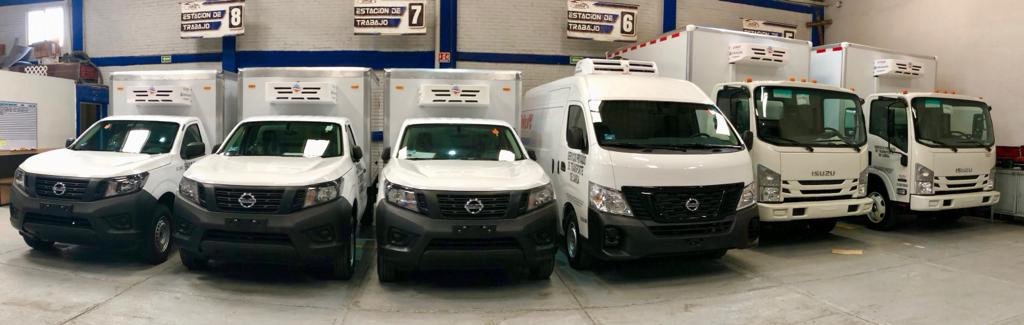
Dubai is one of the busiest cities in the UAE, a hub for tourism, business, and trade. The city hosts thousands of hotels, restaurants, supermarkets, pharmacies, and event venues that operate day and night, serving residents and visitors across the region. Many of the goods they rely on—fresh food, frozen products, medicines, and flowers—come from imports and local suppliers and need careful temperature control during delivery.
Because the climate in Dubai and the Gulf stays hot most of the year, transporting chilled and frozen goods safely is a real challenge. Businesses depend on refrigerated vehicles to keep products fresh, avoid spoilage, and meet customer expectations.
At Fast Chiller Van, we help companies, businesses, individuals, and government entities who need reliable refrigerated transport across Dubai. We provide the right vehicles, monitor temperature throughout the journey, and ensure every delivery maintains its quality. This guide will show how businesses and organizations plan cold deliveries, choose the proper vehicles, manage the transport process, and how we support them every step of the way to ensure products reach their destination safely and in perfect condition.
Why Cold Chain Transport Is Important in the UAE Climate
The UAE experiences extreme heat throughout the year. Summer temperatures (June–September) can rise above 45°C to 50°C, while spring and autumn reach 30°C–40°C, and even winter can average 20°C–30°C. Such intense heat creates a real challenge for maintaining the integrity of any temperature-sensitive delivery.
Cold chain transport is essential to protect goods from these environmental extremes. Without controlled conditions, spoilage, bacterial growth, and loss of quality can occur within hours. The high demand for deliveries during hot months amplifies these risks, especially in urban areas with heavy traffic or outdoor storage.
A reliable refrigerated transport system demonstrates a clear mission: to prevent spoilage, ensure public health and safety, maintain regulatory compliance, uphold client trust, and protect industry reputation. Strong operational practices, real-time monitoring, and adherence to standards ensure that temperature-sensitive deliveries remain safe and consistent in Dubai’s challenging climate.
Types of Goods That Require Temperature-Controlled Transport
Temperature-controlled transport is essential for goods that are sensitive to heat, cold, or humidity. The cold chain ensures safety, quality, and efficacy from origin to delivery. Main categories include:
1. Food and Beverages
- Fresh produce: berries, bananas, vegetables prone to wilting
- Meat, poultry, seafood, and eggs
- Dairy: milk, cheese, yogurt, butter
- Frozen items: ice cream, frozen meals
- Confectionery and chocolate
- Alcoholic beverages: fine wines, specialty beers
2. Healthcare and Life Sciences
- Pharmaceuticals, insulin, antibiotics
- Vaccines requiring chilled or ultra-low temperatures
- Clinical trial materials, lab samples, and medical tissues
3. Chemical, Industrial, and Consumer Goods
- Hazardous materials and temperature-sensitive chemicals
- Cosmetics, perfumes, luxury skincare
- Paints, coatings, and other liquid products
4. Flora, Fauna, and Specialized Items
- Fresh flowers, plants, and live animals
- High-value art, antiques, and sensitive electronics
These goods are transported daily by hotels, restaurants, supermarkets, hospitals, clinics, laboratories, and other large businesses that rely on safe and consistent cold delivery. Individuals can also use refrigerated transport for personal or special deliveries. While this list highlights the most common products, it is only an overview—trusted refrigerated transport providers can handle nearly any temperature-sensitive item and offer tailored solutions to meet specific requirements.
Which Vehicle Works Best for Small Chilled Deliveries in Dubai
For small city deliveries, the first step is understanding which vehicle matches the delivery type, distance, and load. In busy areas of Dubai, where traffic, short routes, and frequent stops are common, compact refrigerated vehicles are often the most suitable option.
A chiller van is designed to maintain a stable temperature between 2°C to 5°C, making it ideal for goods that need cooling but not freezing. It uses insulation and active cooling systems to protect products from outside heat while keeping conditions consistent during transit.
These vehicles work best for daily, short-distance deliveries where timing and accessibility matter. Their size allows easy movement through narrow streets and quick parking, which is essential for regular supply operations across the city.
In such cases, using a chiller van in Dubai becomes a practical part of managing consistent and reliable chilled deliveries.
When Deep-Freeze Transport Becomes Essential for Small Deliveries in Dubai
Not every temperature-sensitive delivery in Dubai can be handled with standard cooling. Some products require strict deep-freeze conditions, especially in a climate where outside heat can quickly break the cold chain, even during short trips.
Frozen items such as meat, seafood, and ice cream must stay at -18°C or lower at all times. Even slight temperature shifts can affect texture, safety, and shelf life. This is where freezer vans play a critical role in small-scale urban deliveries.
Unlike chilled vehicles, these vans use reinforced insulation and high-capacity cooling systems designed to maintain deep-freeze levels, even during frequent door openings and stop-and-go traffic. Their ability to hold stable temperatures in demanding conditions makes them a dependable option for handling sensitive frozen loads.
This is why many small frozen deliveries across the city are managed using dedicated freezer vans built for such conditions.
High Roof Cargo Vans for Non-Refrigerated Deliveries
While this guide focuses on refrigerated transport, many deliveries in Dubai and across the UAE involve dry or bulky goods that do not require cooling. For these, high roof cargo vans are the most practical choice.
At Fast Chiller Van, we operate high Delivery vans to handle these daily non-refrigerated deliveries. Their extra vertical space allows stacking of cartons, retail stock, event equipment, and other bulky items that cannot fit in standard vans. The same high roof design is also used in our chilled and freezer vans, giving businesses flexibility to handle multiple types of deliveries.
Hotels, restaurants, supermarkets, and event organizers regularly rely on these vans. By managing both refrigerated and dry deliveries in our fleet, we ensure that every delivery—chilled, frozen, or non-refrigerated—reaches its destination efficiently and safely.
Large Volume Transport for Chilled and Frozen Goods
For deliveries exceeding 3,000 kg up to 10,000 kg, businesses rely on chiller trucks and freezer trucks to maintain product quality over longer distances or higher volumes. These vehicles operate on the same principles as their smaller van counterparts but offer greater load capacity, reinforced insulation, and advanced refrigeration units for consistent temperatures.
Chiller trucks are commonly used for dairy, fresh produce, and restaurant supplies, while freezer trucks handle frozen meat, seafood, and ice cream for supermarkets, hotels, and catering companies. Both types feature durable structures, reliable cooling systems, and real-time monitoring, ensuring safe and uninterrupted transport.
At Fast Chiller Van, we operate a fleet of these trucks, providing businesses with scalable solutions that combine the efficiency of vans with the capacity and reliability needed for large-volume refrigerated deliveries.
For detailed options, see our Chiller Truck page and Freezer Truck page.
Long-Distance Refrigerated Transport Across the UAE
Transporting chilled and frozen goods across the UAE requires careful planning. When businesses move products from Dubai to Abu Dhabi, Sharjah, Ras Al Khaimah, Fujairah, or Umm Al Quwain, larger trucks are needed to handle higher volumes, often up to 10 tons.
Our refrigerated trucks are designed for multiple scenarios. Each truck has shelving systems that can be set to different temperatures—some shelves for chilled goods (2–5°C), others for frozen items (-18°C), and some for moderate cooling. This allows mixed cargo to travel together without affecting quality.
Durable insulation, advanced refrigeration units, and real-time temperature monitoring ensure every shelf maintains its set range. For businesses planning long-distance deliveries, these refrigerated trucks provide a flexible solution for safe, reliable cold chain transport.
Key Takeaways for Managing Temperature-Sensitive Deliveries
Managing temperature-sensitive goods requires understanding the challenges of climate, cargo type, and delivery scale. Each vehicle—from compact vans to large refrigerated trucks—serves a specific purpose, whether for short city routes or long-distance transport. Proper planning of load distribution, shelving systems, and temperature settings ensures items remain safe and high-quality.
After reading this article, we hope you are able to understand how to organize temperature-controlled deliveries, what is required, what defines a good refrigerated transport service, and which vehicle fits your specific delivery needs, whether chilled, frozen, or mixed cargo.
Why is temperature control critical for deliveries in Dubai?
The UAE experiences extreme heat, often exceeding 45–50°C in summer. Without proper temperature-controlled transport, perishable goods like food, pharmaceuticals, and flowers can spoil quickly, compromising safety, quality, and regulatory compliance. Using vehicles with precise refrigeration prevents temperature fluctuations and ensures products arrive fresh.
How do refrigerated trucks manage multiple temperature ranges at once?
Modern refrigerated trucks often feature shelving or compartment systems, allowing different sections to maintain separate temperatures. For example, one shelf can hold chilled items (2–5°C), another frozen goods (-18°C), and another moderately cooled products. This enables mixed deliveries while preserving the integrity of each product.
What factors should businesses consider when choosing a chilled or freezer van?
Companies should evaluate cargo size, route length, required temperature, and delivery frequency. For short city runs with small loads, compact chiller vans are ideal. For large or long-distance shipments, freezer vans or trucks with advanced insulation and monitoring systems ensure safe transport and prevent spoilage.
How can proper planning reduce waste in cold chain logistics?
By aligning vehicle selection, load arrangement, and route optimization, businesses can maintain consistent temperatures and avoid unnecessary exposure to heat. Effective planning reduces spoilage, preserves product quality, and lowers operational losses, especially in the UAE’s hot climate where cold chain interruptions can occur within hours.